Europe >> Caucasus

The Caucasus region is a mountain range lying between the Black Sea and the Caspian Sea, considered part of the natural boundary between Europe and Asia. Geographically it is usually considered part of Western Asia, adjacent to northeastern Turkey and northwestern Iran. But culturally, this portion of Russia and these small former Soviet republics are arguably part of Eastern Europe suffering from the same ethnic-hatred and tension that has plagued the Balkans including recent wars in Georgia, Armenia and Chechnya.


Countries

Cities

  • Baku — the region's largest city, international oil hub, and ancient capital of Azerbaijan
  • Makhachkala — the largest city of the North Caucasus and capital of Dagestan
  • TbilisiGeorgia's vibrant capital, surrounded by mountains, and filled with good food and wine
  • Vladikavkaz — the North Ossetian capital, "Master of the Caucasus"
  • YerevanArmenia's capital is the region's most laid-back, with great places to eat, and within easy striking distance of the country's principal attractions

Other destinations

  • Dombai — Russia's premiere Caucasian resort
  • Khor Virap — the most photographed place in Armenia, a spectacular monastery atop a huge rock, right at the border, at the foot of Mount Ararat
  • The cathedral, churches, and museums of Echmiadzin, the center of the Armenian Apostolic Church
  • Davit Gareja Monastery — a cave monastery in the Georgian desert, full of beautiful old cave frescoes, and overlooking the vast empty expanse to the south in Azerbaijan
  • The Gates of Alexander at Derbent, Dagestan
  • Europe's three tallest mountains, of which the most famous is Mount Elbrus, all in Kabardino-Balkaria
  • The Petroglyphs at Qobustan — ancient petroglyphs, south of Baku
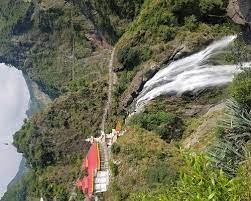
  • Breathtaking Tsminda Sameba Monastery on the slopes of Mount Kazbeg, Georgia
  • Vardzia — one of Georgia's impressive cave cities, hewn from the rock of a river gorge in Samtskhe-Javakheti

Culture and History

The countries and territories of the Caucasus are all isolated but ancient lands inhabited by what is likely the world’s most ethnically diverse region. All of places mentioned here were annexed by the Soviet Union at some point, only to gain independence in the 1900s. Unfortunately since then the area has witnessed several ethnic conflicts, civil wars, and other conflicts both between and inside states. Several regions such as Abkhazia, South Ossetia, and Nagorno-Karabakh gained virtual independence this way, but few nations recognize the legitimacy of these places. While fighting continues in Russia's North Caucasus, countries here should be fairly safe.

While traveling here expect to meet friendly locals, eat food like none other on earth, and witness breathtaking mountain vistas.

Talk

The Caucasus is one of the most complex linguistic regions in the world, containing more than 60 languages from five distinct language families. This linguistic diversity in and of itself is a major draw for anyone interested in linguistics, but it also lends the region one of its most alluring charms - cultural diversity.

Since the end of the Soviet Union, the Caucasus has become decidedly less cosmopolitan as ethnic groups have migrated to their "heritage" countries. This ethnolinguistic segregation has been especially deep where there has been ethnic conflict, such as between Armenians and Azeris, Abkhaz and Georgians, and Ossetes and Georgians. Because of this trend, there is less inter-ethnic interaction and therefore people are less multilingual than in the past. National languages are becoming ever more important to travelers in the region as fewer locals understand languages other than their own. Thus, a traveler to Georgia would benefit from Georgian, a traveler to Azerbaijan - Azeri, a traveler to Armenia - Armenian, etc.

Russian remains the lingua franca of the former Soviet nations of the Caucasus and the most useful language for any traveler intent on visiting multiple countries in the Caucasus. The current trend is for English language study to displace Russian, but the spread of English proficiency remains extremely limited in all four countries of the Caucasus. As a rule, older people are more likely to speak Russian while younger people are more likely to speak a little English or no foreign language at all. Similarly, citizens who are ethnic minorities within their country are more likely to speak Russian because it is a means of inter-ethnic communication. Travelers can expect that ethnolinguistic minorities within Russia, Abkhazia, or South Ossetia will speak Russian, except in very small, isolated villages.

Knowledge of Turkish is very useful for travel in Azerbaijan because Azeri Turkish and Anatolian Turkish are closely enough related to be mutually intelligible.

Travel to Caucasus - Visa Requirements

Tours and Getting around Caucasus

Border Crossing

Border crossing is generally difficult throughout the Caucasus. The Russian-Georgian border is closed to all traffic.

The Armenian-Azerbaijani border is closed because these countries remain at war. To travel overland between Armenia and Azerbaijan, it is necessary to go through a third country, such Georgia or possibly Iran.

Georgia's borders with Turkey, Armenia, and Azerbaijan are all open, making the country somewhat of a regional transit hub for the Caucasus. Since the fall of the Shevardnadze and Abashidze governments in Georgia, bribes are absolutely not necessary for foreign travelers crossing these borders. Offering bribes will either offend border officials or undermine the current government's anti-corruption reforms--don't do it.

How

Overnight trains travel between Tbilisi-Yerevan and Tbilisi-Baku. When traveling by rail, you have the option of rooms containing 4 beds (coupe, pronounced koo-peh') or 2 beds (SV, pronounced es veh). SV is a bit more expensive, but more comfortable and generally considered more safe from pickpockets.

There are direct bus services between Tbilisi-Yerevan and Tbilisi-Baku. If taking the air-conditioned bus between Tbilisi-Baku, bring a jacket! Buses also operate across the Russian-Georgian border, but are not an option for non-CIS country nationals.

If you would prefer a more social mode of transport, minivans (marshrutkas) operate across all open borders and throughout the entire Caucasus region.

There are direct flights between Tbilisi and Baku. Expect no trouble at the airports--they are small and efficient.

Car rental is more expensive in the Caucasus than in the West, but car hire with a driver is quite affordable. For international travel, however, it will be necessary to pay for your driver's lodging unless he was already planning to make the trip.

Caucasus tourist attractions and sightseeing

Itineraries

South Caucasus

Caucasus city tours

Caucasus Restaurants: cheap, moderate and expensive

Caucasus nightlife, bars, clubs and pubs

The drinks of note in the Caucasus are Georgian wines, Armenian cognac (brandy), and Russian vodkas. Local beers throughout the Caucasus are excellent values.

Especially tasty Georgian wines:

  • Red: Saperavi, Mukuzani, Khvanchkara (semi-sweet), Kindzmarauli (semi-sweet)
  • White: Tsinandali, Kakheti, Tbilisuri

Stay safe

The Caucasus is a tinderbox of age-old rivalries, some frozen, some very hot indeed. Much of the Russian North Caucasus is an active war zone. Fragile ceasefires are more or less holding in Georgia's disputed regions of South Ossetia and Abkhazia, as well as between Azerbaijan and Armenia, still officially at war over Nagorno-Karabakh.


Destinations in Caucasus:

This page was last edited by Wikitravel user Vidimian. Based on work by Jani Patokallio, Peter Fitzgerald, Raffi Kojian, Hotels Combined, Eric Polk, Sergey Kudryavtsev and Evan Prodromou, Wikitravel user(s) Cacahuate, DorganBot, !!!!!adeen!!!!! and Cupcakecommander, Anonymous user(s) of Wikitravel and others. - Content on this page is available under the Creative Commons Attribution-ShareAlike 1.0 license

Didn't find what you were looking for?
Submit your question to the Caucasus travel forum
Subject
Question / Comment
Note: HTML tags will be removed.
Your Name (required)
Your Email (will not be published) (required)
Website (Optional)

Note: Hitting submit you grant Traveltips24 the right to edit, display and store the content you provide.